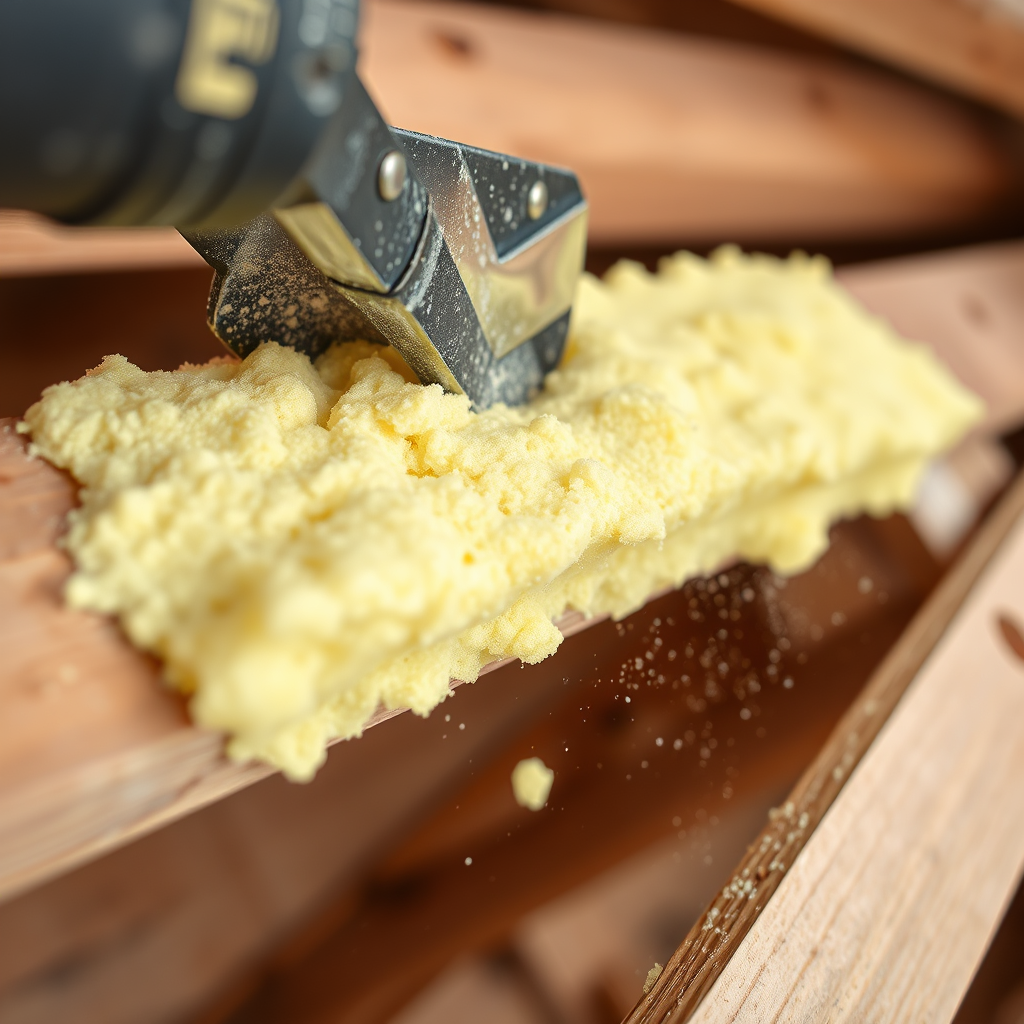
Once spray polyurethane foam cures, it becomes a tough, rigid, fully bonded plastic. That is exactly what makes it a great insulator, and exactly what makes it so difficult to take back out. Whether the foam was installed wrong, has failed over time, or simply needs to come out for a renovation, removing cured foam is a slow, physical, and technically demanding process. This guide walks through how the work is actually done and why it almost always belongs in the hands of a specialist.
Why Cured Foam Is So Hard to Remove
Spray foam is engineered to stick. When it is sprayed, the two chemical components react and expand, flowing into every gap, seam, and pore of the surface beneath it before hardening. That deep mechanical bond is the whole point. There is no solvent that simply dissolves cured foam off a surface the way you might wipe up a fresh spill.
There are two common types, and they behave very differently during removal:
- Open-cell foam is softer, lower density, and spongy. It tears and crumbles, which makes it dusty and messy to remove but somewhat easier to pull off in chunks.
- Closed-cell foam is dense, rigid, and far more aggressively bonded. It often has to be cut, chiseled, and ground away in layers, and it clings tenaciously to the substrate.
Because the foam is mechanically locked into the surface, almost all removal is mechanical rather than chemical. That means scraping, cutting, grinding, and abrading, all of which can damage the surface underneath if done carelessly.
The Professional Removal Process
A proper removal job is methodical. The goal is not just to get the foam off, but to protect the structure, control the mess, and leave a surface that is ready for whatever comes next.
1. Assessment and Planning
Every job starts with figuring out what kind of foam is present, how thick it is, what surface it is bonded to, and why it is coming out. Foam bonded to wood framing is handled differently than foam on metal, concrete, or the underside of a roof deck. The plan also accounts for access, ventilation, and where debris will go.
2. Containment and Protection
Foam removal generates an enormous amount of dust and debris. Professionals seal off the work area with plastic sheeting, protect surfaces that are staying, and set up negative-air or ventilation where needed. This containment keeps fine particles from spreading through the rest of the building.
3. Mechanical Removal
This is the heavy labor. Depending on the foam and substrate, crews use:
- Hand tools like scrapers, pry bars, and chisels for bulk material
- Oscillating and reciprocating tools to cut foam free from framing
- Grinders and abrasive wheels to take down the bonded base layer
- Specialized scraping blades designed to ride along the substrate without gouging it
The work happens in layers. Bulk foam comes off first, then the thin, stubborn bonded layer is carefully worked down to the bare surface.
4. Surface Cleanup
After the foam is gone, a residual film or fuzz of foam often remains keyed into the surface. Crews sand, brush, or grind this away so the substrate is clean and sound. On framing, this means getting back to solid wood. On a roof deck, it means a surface ready for reinsulation or repair.
5. Debris Removal and Disposal
Cured polyurethane foam is bulky and lightweight, and it adds up fast. Professionals bag and haul the debris and dispose of it according to local rules, leaving the site clean.
Why This Is Not a Good DIY Project
It is tempting to grab a pry bar and start ripping. Here is why that usually goes wrong:
- You will damage the substrate. Without the right blades and technique, scrapers gouge wood, dent metal, and crack drywall. The repair bill often dwarfs what removal would have cost.
- The dust is no joke. Grinding cured foam throws fine particulate into the air. Proper respiratory protection, containment, and cleanup matter.
- It is brutally slow by hand. What looks like a small patch can take hours. A whole attic or roof deck can defeat a homeowner entirely.
- Hidden problems show up. Removing foam can reveal moisture damage, rot, or off-ratio material underneath that needs a trained eye to address.
Specialists bring the right tools, containment, and experience to do in a controlled way what a homeowner ends up doing the hard, destructive way.
Get a Free Estimate
If you are dealing with cured spray foam that needs to come out, you do not have to guess your way through it. SprayRemoval specializes in removing cured spray polyurethane foam, overspray, and old foam insulation cleanly and completely, and we work with property owners nationwide. Call us at 844-967-5247 or email josh@contractorschoiceagency.com for a free estimate. We will assess the foam, explain exactly what removal involves, and give you a clear plan to get your surfaces back.